
Key Takeaways
- Street team sampling drives measurable, near-term sales lift, with one industry study showing a +475% day-of sales lift and 11% higher repeat purchase 20 weeks later.
- A high-performing activation needs clearly defined roles (Tour Manager, Brand Ambassadors, Floaters), a focused one-hour training model, and documented compliance and permitting.
- Logistics, packaging, cold-chain planning, distribution pacing, and conversion tethers like QR codes determine whether sampling becomes a measurable business outcome or just an expensive photo op.
- ROI is trackable end to end: total campaign cost, sample acceptance rate, conversion actions, and incremental POS lift all feed a clear ROI formula.
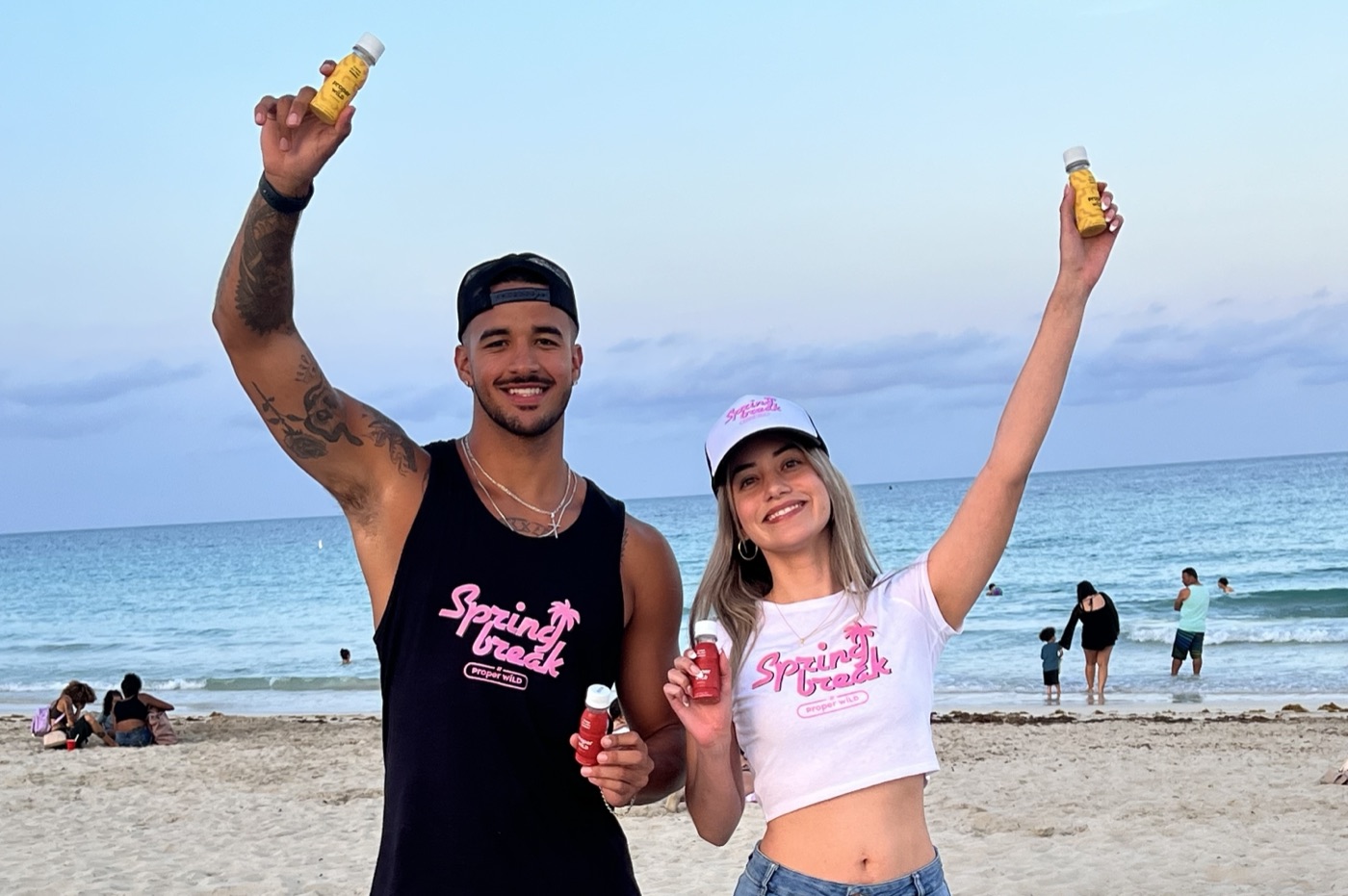
- A Little Bird's Proper Wild activation distributed 217,000+ samples across seven East Coast markets, proving this framework works at scale.
Quick Links
- When to Use Street Teams in a CPG Marketing Strategy
- Campaign Planning: Staffing, Messaging, and Compliance
- Sampling Logistics: The Make-or-Break Factor
- Measurement Framework: From Sampling to ROI
- Amplification: Extending Reach Beyond the Street
- Post-Activation Debrief & Optimization
- Case Study: Proper Wild Multi-Market Sampling Tour
- Final Thoughts
- People Also Ask
- Frequently Asked Questions
For CPG brands, street team marketing remains one of the most powerful brand activation tools available. Not only because they create buzz, but because they have the potential to drive trial at scale and build relationships in real-world environments that digital impressions simply can't touch.
However, executing a street team marketing campaign, especially one that drives ROI, is not simple. As a brand activation agency that specializes in street team marketing, we follow a strict playbook to ensure our clients get the results they need, and they are able to communicate ROI to their leadership.
In this post, you'll learn:
- When and why to deploy street teams in CPG marketing
- How to staff, train, and manage compliance at scale
- Sampling logistics and field execution essentials
- How to deploy a measurement framework (+ we provide you with a downloadable ROI tracker)
- Amplification strategies that connect offline activation to digital
It's critical for CPG marketers to demonstrate how and why product sampling, experiential marketing events, and other live engagements are worth the investment. This guide will help you design and execute street team activations that drive action and results.
1. When to Use Street Teams in a CPG Marketing Strategy
Street teams work best when your campaign goal is to put product directly in people's hands and trace its journey from trial, to conversion, to repeat purchase and brand lift. Why? Because real-world sampling doesn't just raise awareness, it drives measurable behavior change.
For example, one industry study found that at in-store sampling events the day-of-event sales lift for sampled products averaged +475% compared to non-sampled control groups. (QSR Magazine) Further, those households were still 11% more likely to buy the product again up to 20 weeks later. (Progressive Grocer)
Here's how CPG marketers should think about street teams and sampling, with the "why" behind each use case:
- Product launches – When you're introducing a new SKU or flavor, giving consumers a sample lowers their risk of "I'll wait and see." Research shows that about 73% of consumers say they're more likely to buy a product after a trial compared to only ~25% after a traditional ad. (Soho Sampling)
- Seasonal activations – High-demand windows like summer beverages, back-to-school snacks or holiday treats benefit when you pair sampling with contextual relevance. Sampling in the moment captures intent, and evidence suggests experiential activations lead 74% of consumers to say they're more likely to purchase after participating. (Live)
- Retailer negotiations – Beyond consumer trial, you need proof for buyers and distributors that your activation delivered measurable lift and incremental sales. For example, sampling doesn't just help the sampled SKU; one study observed that the parent brand saw +21% lift over 20 weeks post-sampling. (Supermarket News)
- Targeted city pushes – Dense metros, college towns, and commuter hubs drive foot-traffic that converts. A WARC example showed that when just 4.5% of shoppers sampled a cookie, that small cohort generated 25% of total brand sales and 52% of incremental sales during the period. (WARC)
- Community-driven buzz – Live activations and street teams become shareable moments. Experiential stats show 88% of marketers believe face-to-face engagement works and 72% of consumers say they are more likely to purchase after a live experience. (WifiTalents)
Pro tip: Pair street team activations with OOH or paid social in the same geographies. Sampling gives you depth (trial, conversion) and the media gives you breadth (reach). In the WARC cookie example, while the small sample group drove the majority of incremental sales, the larger media-exposed group still contributed 48% of sales lift, proving the two complement each other. (WARC)
2. Campaign Planning: Staffing, Messaging, and Compliance
Staffing: Build the Right Team
When you're activating a street team for a CPG sampling or brand activation, the roles need to be operationally clear. You simply can't ask the staff to just "hand out samples" and hope for the best.
- Tour Manager / Field Manager: Oversees logistics, staff scheduling, compliance, and escalation; acts as the onsite lead point, and lead Brand Ambassador for your brand.
- Brand Ambassadors: The faces of the campaign. These people need to be high energy, approachable, and persuasive. They are responsible for greeting consumers, delivering the product or demo, and leaving a strong brand impression. The role is no longer just a friendly face, but an embodiment of your brand's values and personality. Brand ambassadors also capture quantitative signals (QR scans, coupon redemptions, survey opt-ins) and qualitative feedback in the field, which is critical for measurement and optimization.
- Support / Floater (optional): Assist in resupply, manage crowd flow, or pivot on-site as needed.
Recommended ratio: Industry benchmark sources suggest 1 lead or manager per ~3-5 brand ambassadors + 1 data/collector role to maintain strong oversight and control. For example, staffing performance frameworks for experiential campaigns should include staffing hours, number of staff, and on-site efficiencies as key metrics.
Hiring tip: Use role-play prompts in interviews ("You have 10 seconds to approach and convert a busy commuter") to screen for genuine engagement ability. The most high-performing brand ambassadors are outgoing, adaptable, and extremely proactive.
Training & Scripting
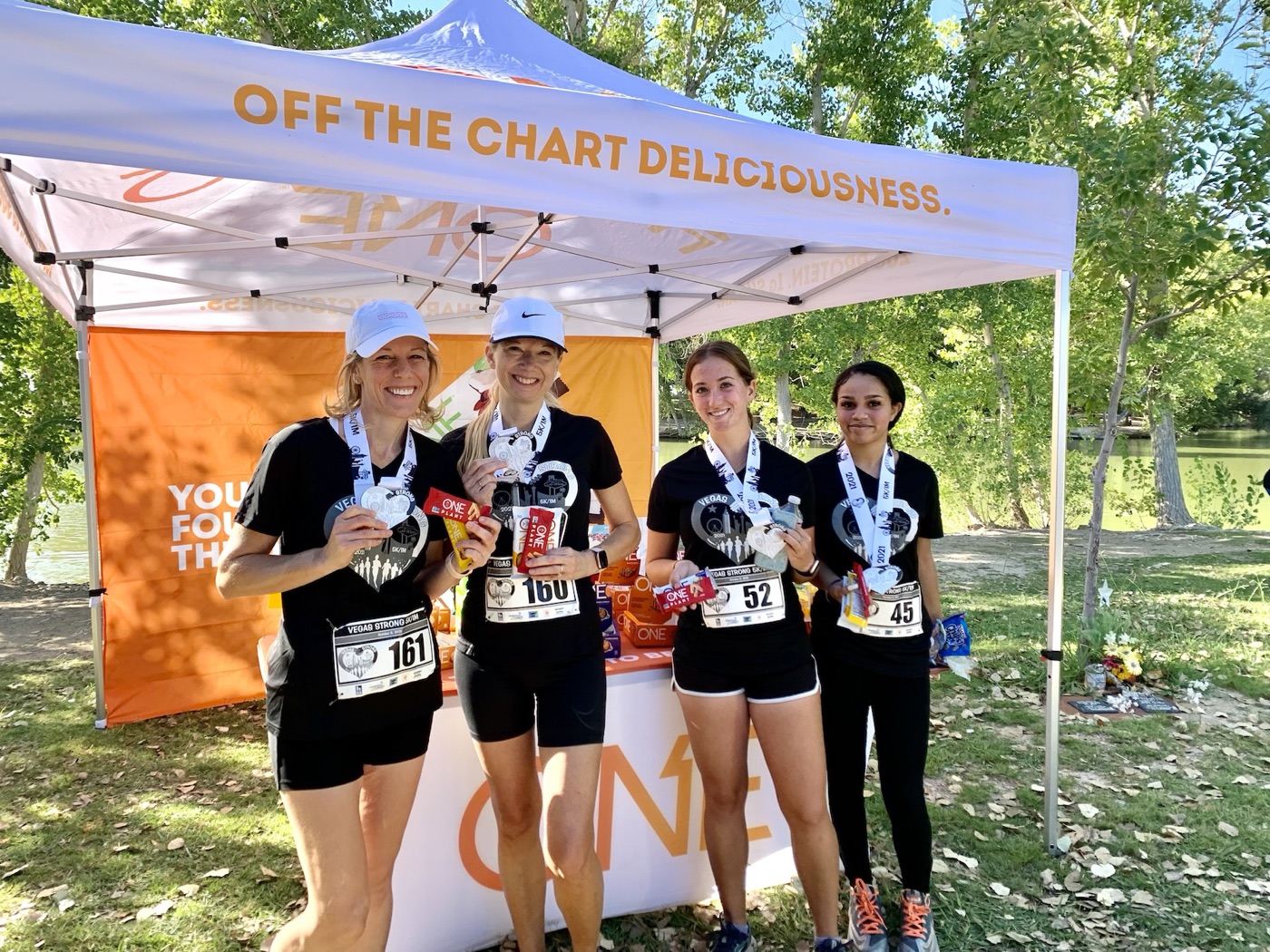
Field training is often underestimated, but it's been repeatedly identified as a differentiator between average and high-performing activations. Best-practice data indicates that although older models suggested longer sessions, recent agency guides for experiential staffing recommend a focused one-hour (60 minute) onboarding session for brand ambassadors. The logic: shorter, sharper training aligns better with field recall and execution.
Training must cover:
- Brand story & values + product knowledge so ambassadors can speak genuinely. Whenever possible, brand ambassadors should trial the product themselves so they can speak personally to its attributes.
- Health, safety and sampling compliance (especially in food/beverage CPG): gloves, sanitation, packaging.
- Role-play & scenario training: e.g., "What if a consumer says 'I don't need a sample'?" or "How do you handle QR scan glitches?" Role-play and rehearsal significantly impact field performance.
- Scripting & quick reference cards: Provide ambassadors with concise talking points (10-second hooks, benefit lines, closing statements).
Include incentives & motivation: Field staff perform better when they know their performance matters. Consider bonuses tied to metrics such as redemption conversions or mystery-shop scores. Aligning staff incentives to real performance (not just attendance) shifts their behaviors from distribution to driving outcomes.
Why this matters: A clear staffing strategy plus investing in quality training ensures you're not just executing an activation, but optimizing for conversion. The difference between a field team that hands out 1,000 samples and one that facilitates 1,000 meaningful engagements is often rooted in staffing, training, and measurement. This kind of integrated staffing and measurement approach is one reason more CPG founders are consolidating experiential work under a single activation partner instead of many vendors.
Compliance & Legal Basics
Below are compliance and legal elements to keep in mind, especially for CPG brands who are sampling food products:
- Permits: many cities require 2–4 weeks lead time for public sampling.
- Insurance: liability coverage for food/beverage sampling.
- Staff classification: ensure ambassadors are properly categorized (W2 vs 1099). This will vary based on your organizational objectives and infrastructure.
- Food safety: gloves, sanitizer, sealed single-serve packaging.
3. Sampling Logistics: The Make-or-Break Factor
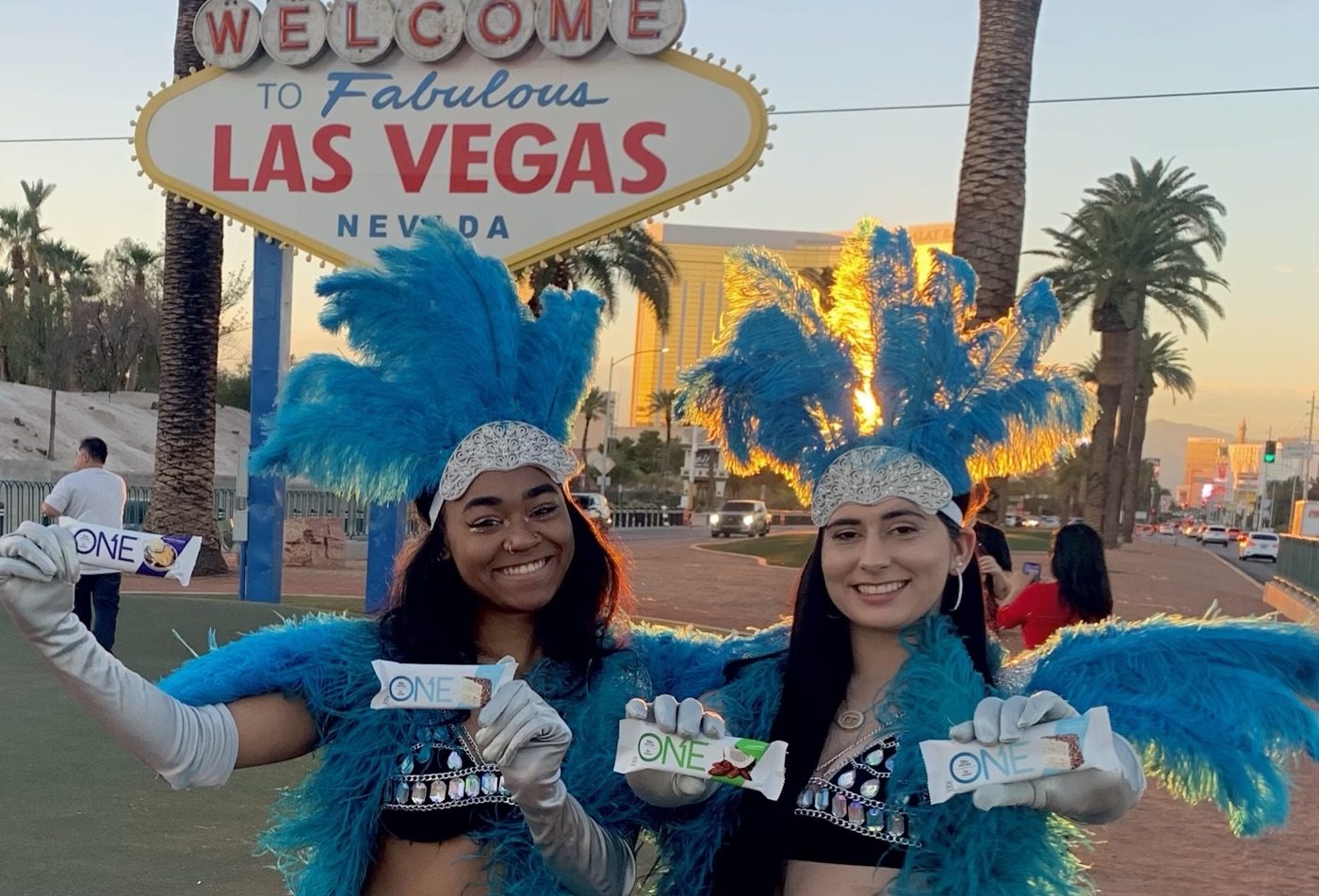
Logistics aren't an operational footnote; they determine whether a sampling activation creates a measurable business outcome or becomes an expensive photo op. When logistics fail you don't just lose a few samples. You lose conversion opportunities, retailer goodwill, and the chance to collect clean attribution data.
Why it matters: multiple studies show sampling drives outsized, immediate lift; in fact, sampled SKUs can see hundreds of percent lift the day of an event and materially higher repeat purchase rates vs non-sampled shoppers. That only happens when the product gets to the consumer in the right condition, at the right moment, with the right tracking. (QSR Magazine)
See below for an actionable logistics checklist:
- Packaging — single-serve + tamper evidence: Use single-serve, tamper-evident packaging and clear branding so the item can be handed off quickly and recognized later on the shelf. Tamper-evident packaging that protects product integrity and consumer trust is essential in food, beverage, and ingestible CPG. (Connover Packaging) Clear branding + secure packs increase the chance the consumer will try later and redeem an offer (vs a loose, unbranded handout).
- Storage & transport — plan for temperature & staging: If your SKU is temperature-sensitive, build climate-controlled transport and local staging hubs. Cold-chain best practices (insulation, real-time temp monitoring, buffer stock) reduce spoilage risk and legal exposure. Even non-perishables benefit from a staging hub for fast resupply. (Insulated Products Corporation)
- Distribution pacing — time to peak: Map distribution to foot-traffic curves: commuter rush, lunch hours, event ingress/egress, and game-day peaks. A well-timed shift can double acceptance rates vs off-peak windows. (Example: campus finals weeks or stadium tailgates produce predictable spikes in receptivity.)
- Collateral tied to conversion: Every sample should carry a conversion tether, which may be a QR code, single-use coupon code, or QR → microsite flow. Well-designed QR offers can reach double-digit scan rates when integrated into the experience. Use short, mobile-first landing pages tied to coupon codes or retargeting pixels. (G2 Learn Hub)
- Inventory tracking & reconciliation: Track units by shift and by brand ambassador and build an alert system that flags when stock reaches a minimum so resupply is proactive. Running out at peak times kills momentum.
4. Measurement Framework: From Sampling to ROI
For many activations, the goal is to tie sampling to conversion and then to revenue. The good news is that sampling is one of the easier offline channels to track ROI metrics if you design data gathering up front.
Key metrics (what to measure and why):
- Total Campaign Cost (ALL-IN): staffing, permits, product, freighting, insurance, collateral, and paid media. Use this as the denominator for ROI.
- Units Distributed & Sample Acceptance Rate: baseline reach and on-site conversion efficiency. Acceptance rate benchmarks vary by environment, but well-run campus and event activations often see high acceptance (50–90% depending on approach and context).
- Conversion Actions (QR scans, coupon redemptions, email opt-ins): the first measurable action that ties a person to the sample. QR codes and single-use coupons are proven methods to create a digital trail from street team to purchase. QR efficacy has surged and best-in-class QR implementations can see scan-to-action percentage rates in the mid-teens to high twenties.
- Incremental Sales / Lift (POS pre vs post): compare baseline period to post-activation sales in the relevant stores/DMAs. Research has documented immediate day-of lift for sampled items depending on the sampling environment/location, and persistent repeat purchase effects for weeks after sampling. That's real revenue you can attribute over the long term. (QSR Magazine)
- ROI: (Incremental Margin – Cost) ÷ Cost. Present both absolute $ and % ROI and show sensitivity (best-case/worst-case) in your deck.
- New-to-Brand %: small sample, big difference — sampling often acquires higher-quality repeat buyers versus some paid channels (Deloitte/industry analyses show higher repeat rates among samplers).
- Amplification metrics (UGC, hashtag use, social reach) & Quality Score (mystery-shop): combine hard and soft metrics in the executive summary.
Measurement Design Tips (So You Can Actually Calculate ROI)
- When possible, instrument samples with a unique redemption mechanism (single-use coupon or geofenced QR).
- Map customers to POS: coordinate with retail partners to get sales data by store and date range — even a week-over-week comparison shows lift.
- Report both leading and lagging KPIs: show immediate engagement (QR scans, redemptions) and 2–12 week sales lift.
- Use retargeting on QR scanners: retargeting users who scanned the QR is low-cost and drives higher conversion rates vs cold audiences; industry retargeting lifts can return meaningful conversion increases.
Want our free Street Team ROI Tracker Template to compile these metrics into an automated dashboard and start proving value? Contact us and we'll send it your way.
5. Amplification: Extending Reach Beyond the Street
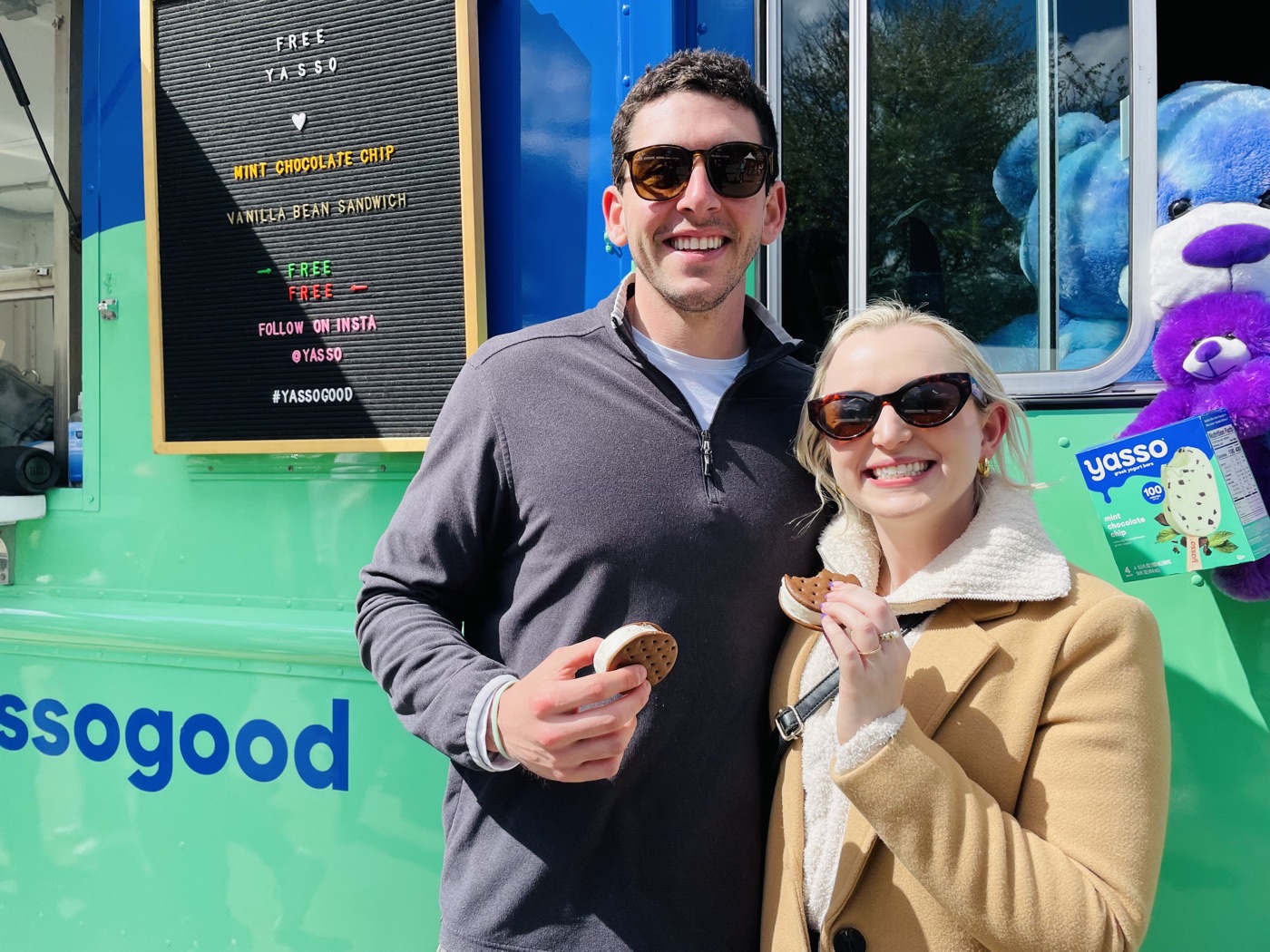
Street teams create the initial human touch, however amplification turns that touch into reach, measurable trials, and scalable media performance.
High-impact amplification tactics (and why they work):
- Social integration (UGC + hashtags): Prompt people to take photos in a branded moment (van, pop-up) and incentivize posting with a micro reward. User-generated content raises trust and extends reach at low incremental cost; social engagement also builds brand trust that feeds purchase intent.
- Influencer micro-tie-ins: Pair local micro-influencers with your street team for amplified credibility. Influencers act as social proof and can boost conversion when timed with the activation.
- QR → retargeting funnel: Anyone who scans a QR is a qualified engaged user; retarget them with time-bound offers to convert trial into purchase. Retargeted audiences convert far better than cold traffic and can be a multiplier for experiential campaigns.
- Media layering (OOH + paid social): Use paid social/OOH in the activation geo to increase awareness. Media gives breadth; the street team gives depth. Together they increase the proportion of sampled people who remember and purchase.
- Retail follow-through (buyer decks): Deliver a concise retailer-facing report (map overlays of sampling density, redemption heatmaps, lift by SKU) so buyers see the commercial case for distribution increases. This is often the lever that turns a one-off sampling program into broader placement.
6. Post-Activation Debrief & Optimization
Treat the campaign post-mortem like a product sprint review by making it fast, data-driven, and actionable.
Essential debrief outputs (what leadership wants):
- Staff reports: what worked, bottlenecks, ambassador feedback. Include top qualitative quotes and recurring staff observations (e.g., flavor feedback, crowd behavior).
- Redemption vs target: compare actual redemptions to your forecast and explain variance.
- Retailer lift analysis: show baseline vs post-activation sales by store; highlight where distribution increases are justified.
- ROI summary: one-pager with Total Cost, Incremental Margin, and ROI %.
- Top 3 operational fixes: prioritized (e.g., pre-sorted variety packs, faster resupply windows, cold-chain upgrades, improved signage, or iPad data capture for on-the-spot opt-ins). Many programs find 10–20% efficiency gains by adopting a small set of operational changes revealed during debrief.
- Recommendations for scale: where to double down (markets, dates) and three A/B tests for the next run (creative, incentive, staff script).
Close the loop by converting the learnings into a living Street Team Activation Playbook (standardized SOPs, scripts, inventory checklists, QA templates) so each activation iterates faster and smarter.
7. Case Study: Proper Wild Multi-Market Sampling Tour
A Little Bird executed a multi-city street team activation for Proper Wild, a clean-energy shot brand, designed around the same sampling and ROI measurement principles outlined above.
Over 217,000 samples were distributed across seven East Coast markets, including major universities, professional sports venues, and downtown commuter zones. Each market used pre-planned daily routes and a tiered sampling strategy, combining high-volume distribution sites (like NFL and NBA arenas) with high-engagement zones (college campuses and fitness centers).
The team applied A Little Bird's full measurement framework in real time:
- Sampling data was logged daily per location and shift.
- QR code coupons tracked digital engagement and post-sample conversions.
- Consumer feedback captured sentiment by flavor, audience, and environment, identifying Lemon-Lime and Peach Mango as top performers.
- Operational learnings (like pre-sorting variety packs and integrating branded giveaways) improved speed, compliance, and ambassador efficiency.
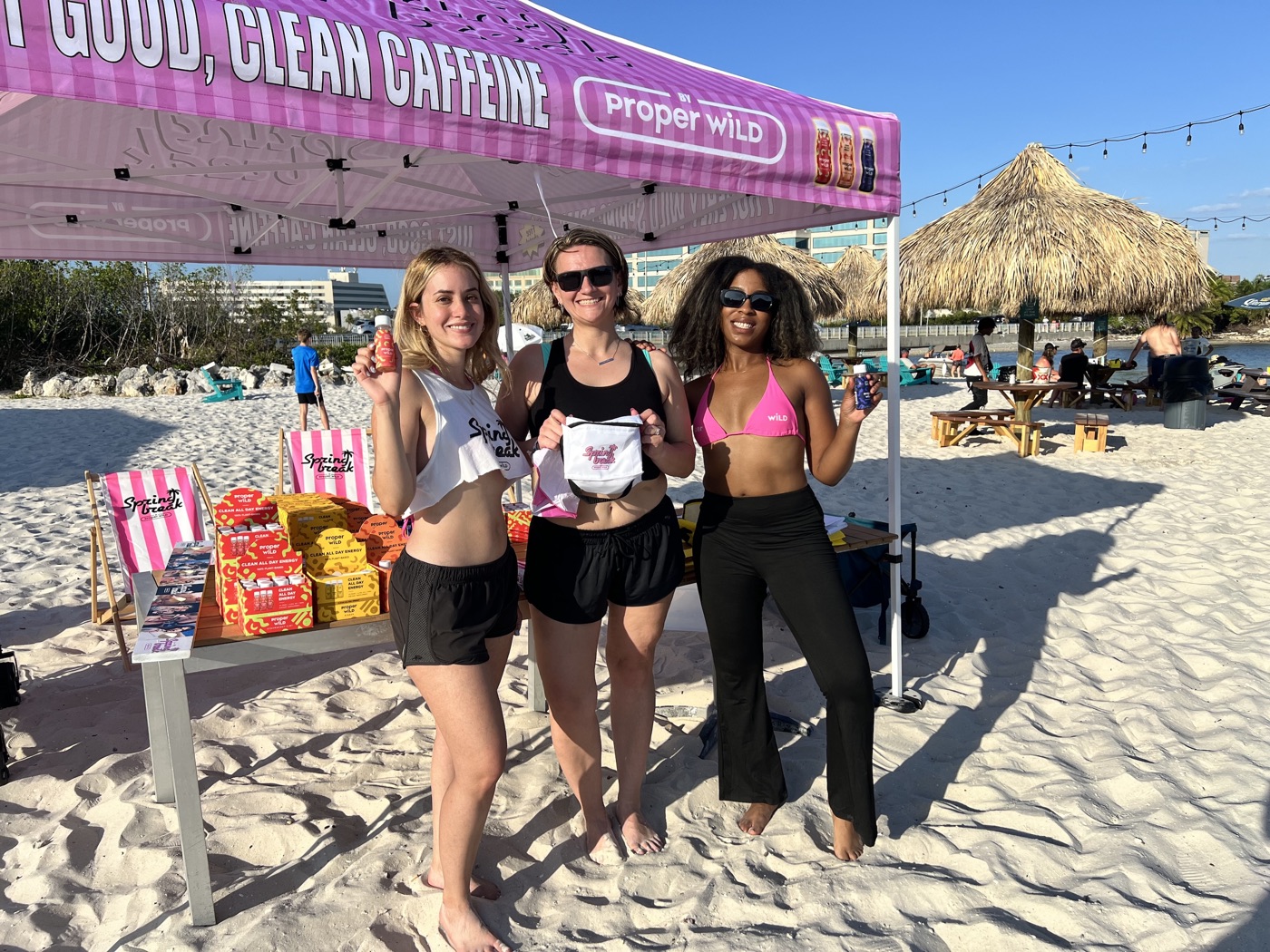
The result: quantifiable ROI insights by region, optimized cost-per-sample, and a clear read on where to expand in the next activation cycle. This is a model for how strategic street team planning turns raw distribution into measurable brand lift.
8. Final Thoughts: Making Street Team Marketing Pay Off
Street team marketing works when it's run with the same rigor as a digital campaign. For CPG brands, the opportunity is massive: product trial, attributable lift, retailer confidence, and consumer connection.
The difference between a forgettable handout and a high-performing brand activation is in the details: staffing, logistics, measurement, and amplification.
With this playbook and ROI toolkit, you can stop guessing and start proving the value of your activations. If you're ready to put a street team playbook to work for your brand, take a look at the activations we've built for other CPG brands, or contact us to book your discovery call.
People Also Ask
What's the ideal staffing ratio for a street team activation?
Industry benchmarks recommend one lead or field manager for every three to five brand ambassadors, plus a dedicated data or collection role, to maintain oversight and consistent measurement.
How long should brand ambassador training take?
Recent agency guides for experiential staffing recommend a focused one-hour (60 minute) onboarding session that covers brand story, product knowledge, compliance, and role-play scenarios. Shorter, sharper training tends to align better with field recall and execution.
What makes a sample easy to track back to a sale?
A conversion tether. Every sample should carry a QR code, single-use coupon, or QR-to-microsite flow so the brand ambassador's handoff can be connected to a redemption, an opt-in, or a POS sale later on.
Why do sampling programs need cold-chain planning?
Temperature-sensitive SKUs require climate-controlled transport and local staging hubs. Cold-chain best practices like insulation, real-time temperature monitoring, and buffer stock reduce spoilage risk and legal exposure, and even non-perishables benefit from a staging hub for fast resupply.
Frequently Asked Questions
What is street team marketing for CPG brands?
It's when trained brand ambassadors distribute samples and engage consumers in real-world locations to drive trial, awareness, and sales lift.
How do you measure ROI from street team activations?
Use redemption codes, QR scans, and POS sales lift analysis. Our free ROI tracker makes it simple.
What's the best place to run street team campaigns?
High-traffic areas that match your target demo — commuter hubs, campuses, festivals, and outside key retail partners.
What's a good sample acceptance rate for a CPG sampling event?
It varies by environment, but well-run campus and event activations often see acceptance rates between 50% and 90%, depending on the approach, location, and how the offer is framed.
Do I need a permit to run a street team sampling campaign?
Often, yes. Many cities require two to four weeks of lead time for public sampling permits, and food or beverage sampling typically also requires liability insurance and proper staff classification (W2 vs 1099).